.svg)
How to Get on Spotify Playlists in 2026 - What Actually Works Now
The Spotify playbook has quietly been rewritten. Editorial placements now follow the algorithm, not the other way around, and artists who understand how to drive saves, retention, and off-platform traffic are pulling ahead. This is a practical look at what’s changed and how to adapt before you fall behind.

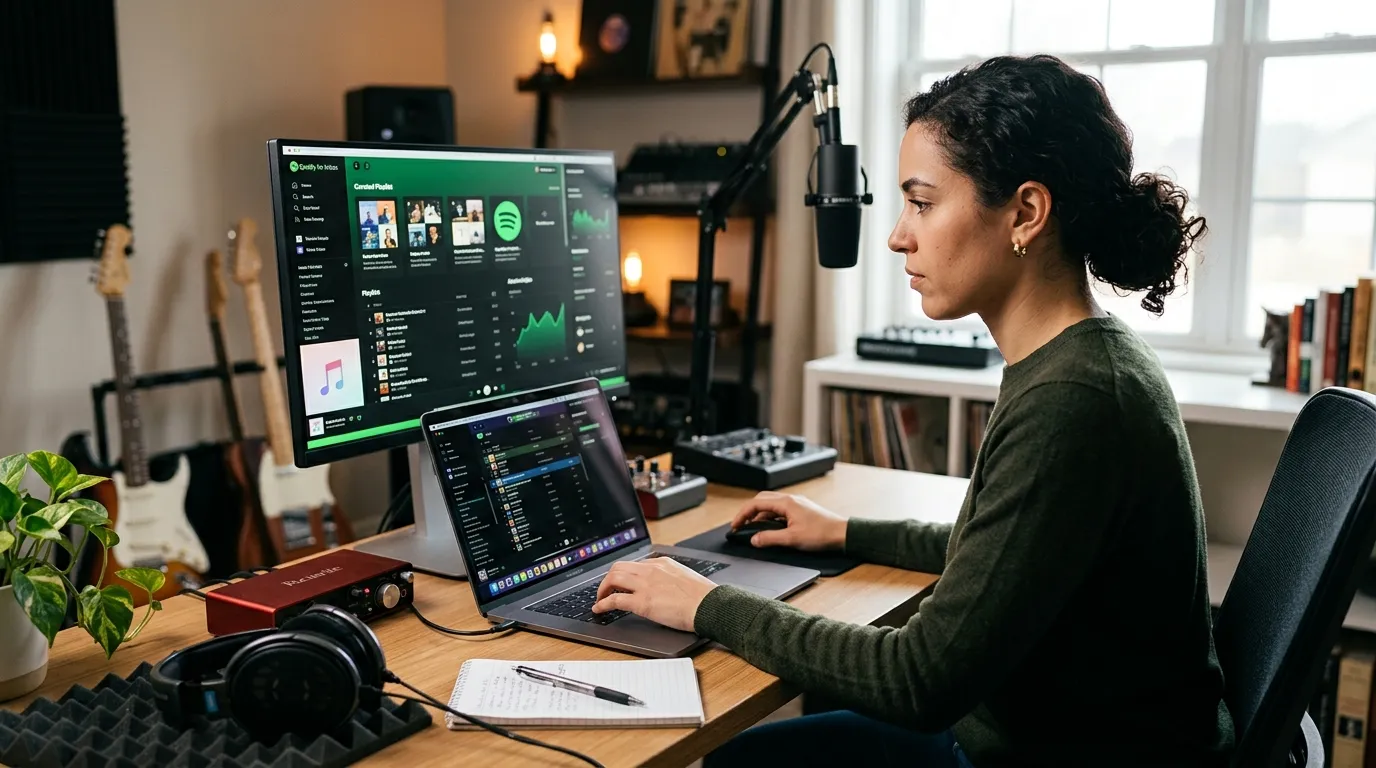
Spotify's playlist ecosystem has changed dramatically, and the tactics that worked in 2023 are now largely obsolete. Understanding how to get on Spotify playlists in 2026 requires a fundamental shift in thinking: away from cold pitching and toward building the algorithmic signals that trigger organic placement. The artists seeing real results have stopped chasing curators and started engineering discoverability from the ground up.
Mastering the Spotify for Artists Ecosystem in 2026
The Spotify for Artists dashboard has evolved into a sophisticated command center. Your artist profile, release history, and engagement metrics feed directly into editorial consideration algorithms. Completing every profile element, from the bio to social links, signals professionalism to both human editors and automated systems.
Optimizing Your Pitch for the New AI-Driven Editorial Algorithms
Editorial pitches can now pass through AI screening before reaching human curators. The algorithm analyzes your pitch language, release history, and engagement trajectory. Write pitches that include specific genre tags, mood descriptors, and comparable artists with verifiable streaming numbers. Vague descriptions get filtered out. Mention concrete details: the producer you worked with, the specific subgenre, the story behind the track. Use your words carefully to optimize for automated searches. It is more likely to be found with "chilled out dance song featuring clarinet" than "deep vibe masterpiece". Pitches submitted 4-6 weeks before release date perform measurably better than last-minute submissions.
Leveraging Canvas and Visual Assets to Increase User Retention
Canvas videos increase average stream time by 5-8 seconds, which directly impacts algorithmic favor. Create loops that complement your track's energy without distracting from the music. Artists using Canvas consistently see higher save rates, and saves are the currency that matters most for playlist consideration in 2026.
The Shift from Direct Pitching to Algorithmic Triggers
Direct pitching to editorial playlists now accounts for less than 15% of successful placements. The rest comes from algorithmic triggers based on listener behavior patterns.
Using Discovery Mode to Feed the Radio and Autoplay Engines
Discovery Mode remains controversial, but the data is clear: tracks enrolled in Discovery Mode appear 40% more frequently in Radio and Autoplay sessions. The trade-off is a reduced royalty rate, but for catalog tracks struggling to find new listeners, it's often worth the exchange. Use it strategically on tracks that have proven appeal but stalled growth.
Why Save-to-Stream Ratios Matter More Than Monthly Listeners
Monthly listener counts mean almost nothing for playlist placement. Spotify's algorithm prioritizes save-to-stream ratios because saves indicate genuine listener interest. A track with 10,000 streams and a 12% save rate will outperform one with 100,000 streams and a 2% save rate for algorithmic playlist consideration. Focus your promotional energy on audiences likely to save, not just stream.
Targeting Modern Independent Curators and Influencers
Independent curators still matter, but the landscape has fractured across platforms. The most influential tastemakers now operate on TikTok and Instagram as much as Spotify itself.
Building Relationships with Niche TikTok and Reels Curators
Music discovery increasingly starts off-platform. TikTok curators with 50,000-200,000 followers in specific niches often drive more Spotify saves than massive editorial playlists. Build genuine relationships by engaging with their content before pitching. A single viral sound on TikTok can trigger Spotify's algorithm to place your track in Discover Weekly for thousands of users.
Driving Off-Platform Traffic to Boost In-App Authority
Spotify rewards artists who bring listeners to the platform. External traffic signals that you have an audience worth serving.
Creating Sound-First Content to Fuel Viral Audio Trends
Design 15-30 second segments of your tracks specifically for social content. The hook that works on Spotify might not be the hook that works on TikTok. Many successful artists now create alternate mixes optimized for short-form video, then direct that traffic back to the full release.
Sustainable Growth Strategies and Avoiding Playlisting Scams
The playlist placement industry is rife with fraud. Protecting your account requires vigilance.
Spotting Artificial Stream Farms and Protective Distribution
Playlists offering guaranteed placements for payment are almost always connected to stream farms. Spotify's detection has improved dramatically, and artists caught on these playlists face permanent algorithmic penalties. Check any playlist's listener geography and engagement patterns before accepting placement.
The Waterfall Release Method for Maximum Catalog Visibility
The waterfall method, releasing singles that later appear on an EP or album, keeps your catalog active in algorithmic consideration. Each release creates a new opportunity for playlist placement while cross-promoting your existing tracks. Space releases 4-6 weeks apart to maintain momentum without listener fatigue.
Getting on Spotify playlists in 2026 requires patience and strategic thinking. Focus on building genuine engagement signals rather than chasing shortcuts. The artists winning now are those who understand that playlist placement is an outcome of good music marketing, not a substitute for it.
Run your music business from one place
Lifetime pre-saves, distribution, and royalty accounting in one workspace.