.svg)
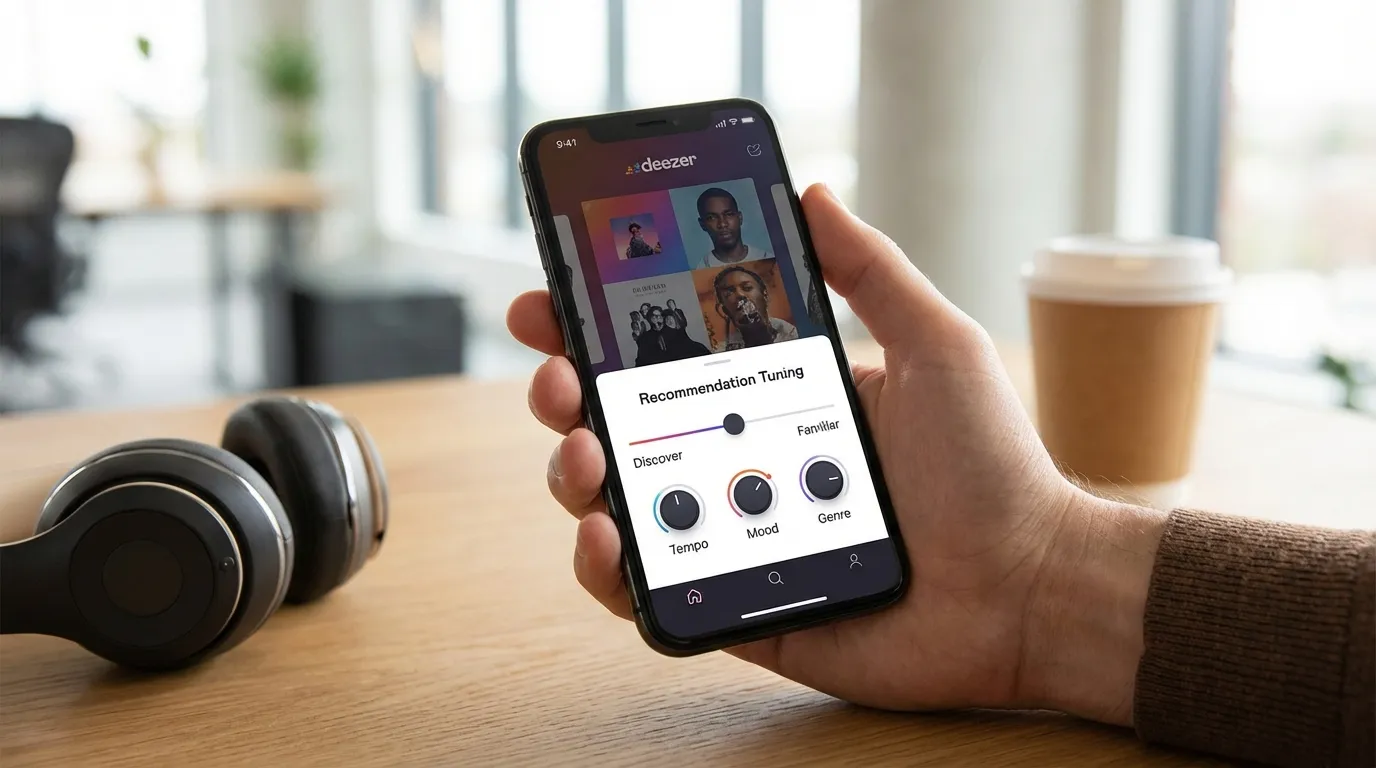
Deezer redéfinit la découverte musicale en donnant aux auditeurs un contrôle réel sur leurs recommandations auparavant rigides. Au lieu de s'appuyer sur des algorithmes opaques, les utilisateurs peuvent désormais affiner les niveaux de découverte, ajuster l'équilibre des genres, filtrer les ambiances et exclure les artistes indésirables en temps réel. Dans un paysage du streaming dominé par des systèmes autonomes, ce virage vers une personnalisation transparente et pilotée par l'utilisateur signale une évolution plus large de l'industrie, passant de l'écoute passive à la curation collaborative.

Le virage vers une personnalisation centrée sur l'utilisateur
Pendant des années, le streaming musical a ressemblé à une conversation à sens unique. Les algorithmes décidaient de ce que vous alliez écouter ensuite, et votre seule option était de passer ou d'enregistrer. Cette dynamique est en train de changer. Deezer ajoute à sa plateforme un réglage des recommandations contrôlé par l'utilisateur, donnant aux auditeurs un contrôle direct sur le fonctionnement réel de leur découverte musicale. Il ne s'agit pas d'un simple ajustement de paramètres : cela représente une refonte fondamentale de la manière dont les services de streaming devraient traiter leurs utilisateurs. Au lieu d'être des consommateurs passifs de choix algorithmiques, les auditeurs peuvent désormais façonner leur expérience avec précision.
Évolution de la fonctionnalité Flow de Deezer
Le Flow de Deezer a toujours été l'outil de personnalisation emblématique de la plateforme, mélangeant des titres familiers avec de nouvelles découvertes basées sur l'historique d'écoute. La fonctionnalité fonctionnait raisonnablement bien, mais elle reposait sur des suppositions. L'algorithme devinait ce que vous vouliez sans demander. Les nouveaux contrôles de réglage transforment Flow d'un système "boîte noire" en quelque chose de collaboratif, où vos préférences guident activement ce qui suit.
Aller au-delà de l'écoute passive basée sur des algorithmes
La plupart des services de streaming traitent les utilisateurs comme des points de données plutôt que comme des décideurs. Vous écoutez, ils suivent, ils servent. Ce modèle passif génère de la frustration lorsque les recommandations manquent la cible à plusieurs reprises. En permettant aux utilisateurs d'ajuster leurs propres paramètres de découverte, Deezer reconnaît une évidence : les auditeurs savent ce qu'ils veulent mieux que n'importe quel algorithme ne peut le deviner.
Comment fonctionne le nouveau réglage des recommandations
Le système de réglage fonctionne via des curseurs intuitifs et des paramètres de préférence qui s'ajustent en temps réel. Plutôt que d'enfouir les options dans des menus complexes, Deezer place ces outils là où les utilisateurs interagissent naturellement avec leur musique.
Ajuster les niveaux de découverte par rapport aux niveaux de familiarité
Un curseur central vous permet d'équilibrer entre confort et exploration. Faites glisser vers la familiarité, et vous entendrez plus d'artistes et de titres que vous aimez déjà. Poussez vers la découverte, et l'algorithme prendra plus de risques, en introduisant des genres inconnus et des artistes émergents. Ce contrôle simple répond à l'une des plus anciennes plaintes du streaming : la tension entre le désir de nouveauté et le désir de fiabilité.
Contrôles de filtrage par genre et par ambiance
Au-delà du curseur de découverte, les utilisateurs peuvent désormais spécifier quels genres doivent apparaître plus ou moins fréquemment dans les recommandations. Fatigué que le hip-hop domine vos suggestions ? Réduisez-le. Vous voulez plus de jazz pendant les heures de travail ? Augmentez son poids. Le filtrage par ambiance ajoute une autre dimension, vous permettant de prioriser les titres énergiques, les ambiances douces, ou tout ce qui se trouve entre les deux, en fonction du contexte plutôt que de playlists rigides.
Outils de feedback et d'exclusion en temps réel
La fonction d'exclusion résout un désagrément persistant. Si vous avez entendu une chanson trop de fois ou si vous ne supportez tout simplement pas un artiste en particulier, vous pouvez désormais les supprimer entièrement des recommandations. Cette boucle de rétroaction fonctionne immédiatement, ajustant votre expérience sans attendre que l'algorithme finisse par comprendre vos préférences à force de sauts de pistes.
Transparence dans la curation musicale
L'approche de Deezer offre quelque chose de rare : une visibilité sur le processus de recommandation. Lorsque vous ajustez un curseur, vous voyez des résultats immédiats. Cette transparence instaure la confiance car les utilisateurs comprennent la relation de cause à effet entre leurs choix et leur expérience d'écoute. Fini de se demander pourquoi l'algorithme continue de suggérer des artistes pour lesquels vous n'avez jamais montré d'intérêt.
Réduire les boucles de rétroaction répétitives
Les chambres d'écho algorithmiques affligent tous les services de streaming. Écoutez une chanson country, et soudain, tout votre flux change. Les commandes de réglage aident à rompre ces boucles en permettant aux utilisateurs de corriger manuellement le cap. Si vos recommandations ont dérivé vers un territoire que vous n'appréciez pas, vous pouvez réinitialiser des éléments spécifiques sans tout recommencer.
Comparaison avec Spotify et Apple Music
L'algorithme de Spotify reste largement passif pour les utilisateurs, offrant un contrôle limité au-delà de l'appréciation et de la désapprobation des titres et des artistes. Apple Music propose quelques paramètres de préférence, mais rien d'aussi granulaire que ce nouveau système de Deezer. En offrant un réglage des recommandations contrôlé par l'utilisateur, Deezer se différencie sur un marché saturé où la plupart des services semblent interchangeables. Il est probable que d'autres DSP développent des outils similaires dans un avenir proche.
Attirer les utilisateurs avancés et les audiophiles
Les auditeurs de musique exigeants se sentent souvent mal servis par le streaming grand public. Ils veulent du contrôle, pas une commodité de façade. La démarche de Deezer cible précisément cette démographie : des personnes qui se soucient profondément de leur expérience d'écoute et paieront pour des plateformes qui respectent leurs préférences. Pour les artistes indépendants utilisant des plateformes de distribution comme Releese, ce virage vers le contrôle utilisateur pourrait signifier une meilleure visibilité lorsque les auditeurs recherchent activement de nouvelles musiques.
L'avenir de la découverte interactive sur Deezer
Cette mise à jour indique la direction que prend le streaming musical. La consommation passive cède la place à la curation active, les utilisateurs exigeant davantage leur mot à dire dans leurs expériences algorithmiques. Le pari de Deezer est simple : les gens s'engageront plus profondément avec un service qui les traite comme des partenaires plutôt que comme des sujets. Si la fonctionnalité réussit, attendez-vous à ce que les concurrents suivent avec leurs propres mécanismes de contrôle. L'ère du « faites confiance à l'algorithme » touche à sa fin, remplacée par quelque chose de plus collaboratif et, franchement, de plus respectueux de la manière dont les gens veulent réellement découvrir la musique.
Gérez votre activité musicale depuis une plateforme unique
Pré-enregistrements à vie, distribution et gestion des redevances dans un seul espace de travail.