.svg)
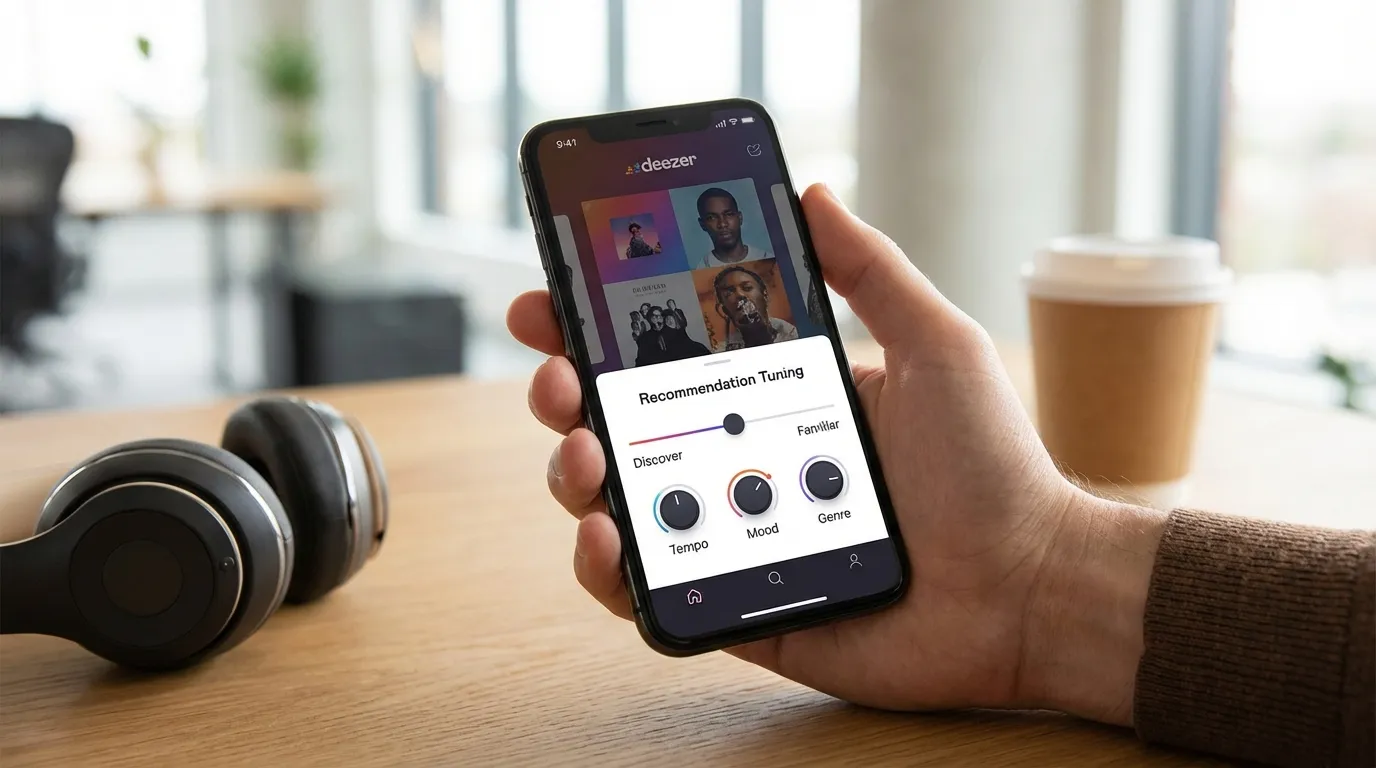
Deezer is redefining music discovery by giving listeners real control over their previously rigid recommendations. Instead of relying on opaque algorithms, users can now fine-tune discovery levels, adjust genre balance, filter moods, and exclude unwanted artists in real time. In a streaming landscape dominated by hands-off systems, this shift toward transparent, user-driven personalization signals a broader industry move from passive listening to collaborative curation.

The Shift Toward User-Centric Personalization
For years, music streaming felt like a one-way conversation. Algorithms decided what you'd hear next, and your only option was to skip or save. That dynamic is changing. Deezer adds user-controlled recommendation tuning to its platform, giving listeners direct control over how their music discovery actually works. This isn't a minor settings tweak: it represents a fundamental rethinking of how streaming services should treat their users. Instead of being passive consumers of algorithmic choices, listeners can now shape their experience with precision.
Evolution of Deezer's Flow Feature
Deezer's Flow has always been the platform's signature personalization tool, mixing familiar tracks with new discoveries based on listening history. The feature worked reasonably well, but it operated on assumptions. The algorithm guessed what you wanted without asking. The new tuning controls transform Flow from a black-box system into something collaborative, where your preferences actively guide what comes next.
Moving Beyond Passive Algorithm Listening
Most streaming services treat users as data points rather than decision-makers. You listen, they track, they serve. This passive model creates frustration when recommendations miss the mark repeatedly. By letting users adjust their own discovery parameters, Deezer acknowledges something obvious: listeners know what they want better than any algorithm can guess.
How the New Recommendation Tuning Works
The tuning system operates through intuitive slider controls and preference settings that adjust in real-time. Rather than burying options in complex menus, Deezer places these tools where users naturally interact with their music.
Adjusting Discovery vs. Familiarity Levels
A central slider lets you balance between comfort and exploration. Slide toward familiarity, and you'll hear more artists and tracks you already love. Push toward discovery, and the algorithm takes bigger risks, introducing unfamiliar genres and emerging artists. This simple control addresses one of streaming's oldest complaints: the tension between wanting something new and wanting something reliable.
Genre and Mood Filtering Controls
Beyond the discovery slider, users can now specify which genres should appear more or less frequently in recommendations. Tired of hip-hop dominating your suggestions? Dial it back. Want more jazz during work hours? Increase its weight. Mood filtering adds another dimension, letting you prioritize energetic tracks, mellow vibes, or anything between based on context rather than rigid playlists.
Real-time Feedback and Exclusion Tools
The exclusion feature solves a persistent annoyance. If you've heard a song too many times or simply can't stand a particular artist, you can now remove them from recommendations entirely. This feedback loop works immediately, adjusting your experience without waiting for the algorithm to eventually figure out your preferences through skips.
Transparency in Music Curation
Deezer's approach offers something rare: visibility into the recommendation process. When you adjust a slider, you see immediate results. This transparency builds trust because users understand the cause-and-effect relationship between their choices and their listening experience. No more wondering why the algorithm keeps suggesting artists you've never shown interest in.
Reducing Repetitive Feedback Loops
Algorithmic echo chambers plague every streaming service. Listen to one country song, and suddenly your entire feed shifts. The tuning controls help break these loops by letting users manually correct course. If your recommendations have drifted into territory you don't enjoy, you can reset specific elements without starting over completely.
Comparison with Spotify and Apple Music
Spotify's algorithm remains largely hands-off for users, offering limited control beyond liking and disliking tracks and artists. Apple Music provides some preference settings, but nothing as granular as this new system from Deezer. By offering user-controlled recommendation tuning, Deezer differentiates itself in a crowded market where most services feel interchangeable. Likely to see other DSPs build similar tools in the near future.
Attracting Power Users and Audiophiles
Serious music listeners often feel underserved by mainstream streaming. They want control, not convenience theater. Deezer's move targets exactly this demographic: people who care deeply about their listening experience and will pay for platforms that respect their preferences. For independent artists using distribution platforms like Releese, this shift toward user control could mean better visibility when listeners actively seek new music.
The Future of Interactive Discovery on Deezer
This update signals where music streaming is heading. Passive consumption is giving way to active curation, with users demanding more say in their algorithmic experiences. Deezer's bet is straightforward: people will engage more deeply with a service that treats them as partners rather than subjects. If the feature succeeds, expect competitors to follow with their own control mechanisms. The era of "trust the algorithm" is ending, replaced by something more collaborative and, frankly, more respectful of how people actually want to discover music.
Run your music business from one place
Lifetime pre-saves, distribution, and royalty accounting in one workspace.