.svg)
Spotify s'efforce de monétiser les œuvres dérivées
Spotify mise gros sur la culture du remix. Des morceaux nightcore accélérés aux éditions ralenties et réverbérées oniriques, les œuvres dérivées créées par les fans deviennent virales, et Spotify veut sa part du gâteau. Des outils de remixage natifs et de nouveaux modèles de monétisation pourraient-ils redéfinir la manière dont les auditeurs interagissent avec la musique ? La prochaine ère du streaming est axée sur l'interaction, pas seulement sur l'écoute.

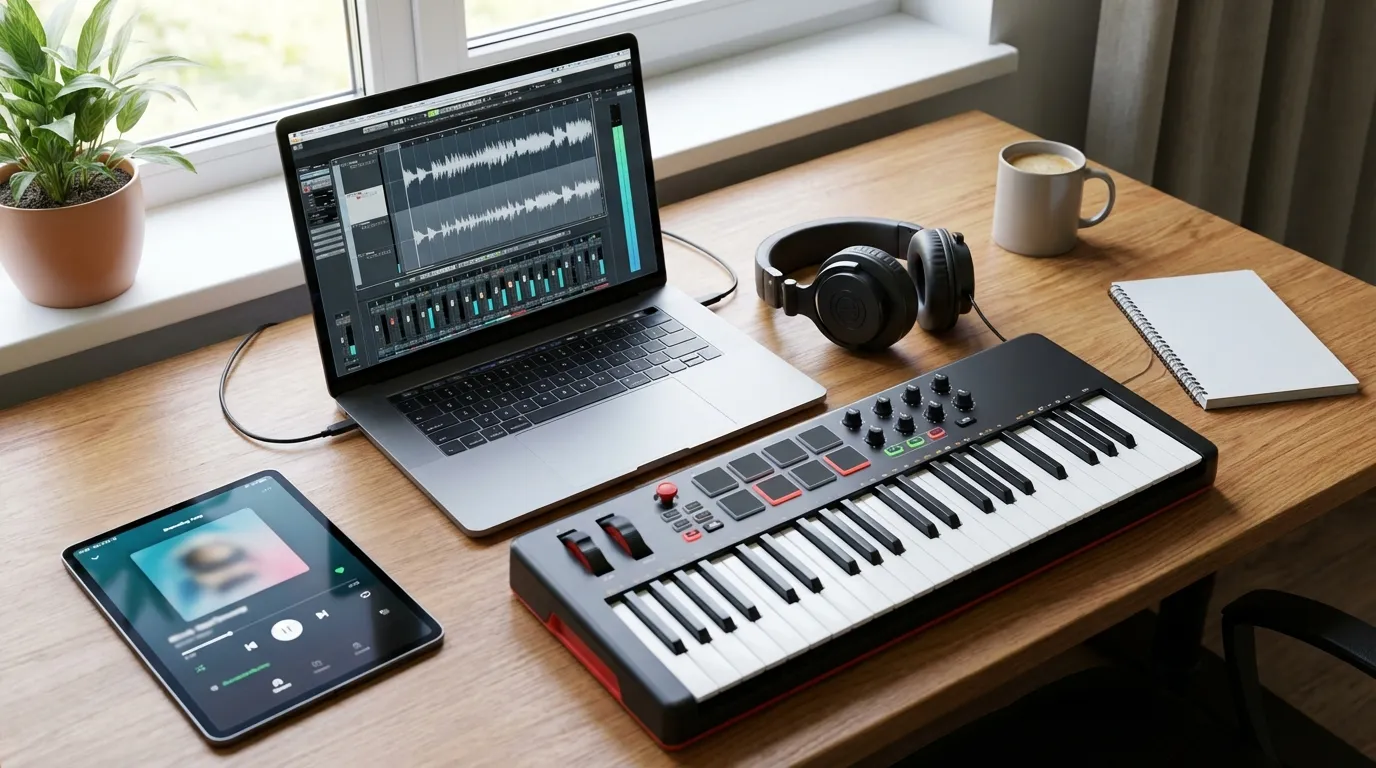
Le géant du streaming fait un pari calculé sur un phénomène qui a remodelé la consommation musicale depuis des années. Spotify s'efforce de monétiser les œuvres dérivées, ces versions accélérées, ralenties et remixées de morceaux qui ont explosé sur les réseaux sociaux. Ce qui a commencé comme des montages de fans sur TikTok est devenu une opportunité de revenus légitime, et la plateforme veut sa part. Plutôt que de combattre cette tendance, Spotify semble prête à l'adopter avec des outils qui pourraient changer fondamentalement la façon dont les auditeurs interagissent avec leurs chansons préférées.
L'essor de l'audio modifié et l'économie des dérivés
Définition des morceaux accélérés, ralentis et remixés
Les œuvres dérivées ne sont pas nouvelles. La musique chopped and screwed remonte au hip-hop de Houston dans les années 1990. Ce qui a changé, c'est l'accessibilité. N'importe qui avec un smartphone peut modifier la hauteur d'un morceau, ajouter de la réverbération et le télécharger en quelques minutes. Ces modifications vont de subtils ajustements de tempo à des transformations spectaculaires qui rendent les chansons presque méconnaissables. La communauté "nightcore" accélère les morceaux pour une sensation énergique, tandis que les éditions "slowed + reverb" créent des versions oniriques et atmosphériques qui dominent les playlists de fin de soirée.
L'impact viral des tendances TikTok sur la consommation Spotify
TikTok est devenu le moteur de découverte des morceaux modifiés. Une version accélérée d'une chanson devient virale, les utilisateurs la recherchent sur Spotify, et soudain, des dizaines de téléchargements non officiels se disputent les écoutes. Certaines versions dérivées ont surpassé les originaux de millions d'écoutes. Cela crée une situation compliquée où les détenteurs de droits perdent des revenus tandis que des téléchargeurs anonymes profitent du travail d'autrui.
Le virage stratégique de Spotify vers des outils de remixage intégrés à l'application
Développement de fonctionnalités natives de manipulation audio
Spotify teste discrètement des fonctionnalités permettant aux utilisateurs d'ajuster la vitesse de lecture et la hauteur directement dans l'application. La prochaine étape logique est une suite complète d'outils de remixage. Imaginez créer votre propre version ralentie d'un morceau et l'enregistrer dans une playlist, le tout sans quitter la plateforme. Cela maintient un engagement élevé et positionne Spotify comme plus qu'un simple service d'écoute passive.
Limiter la déperdition de la plateforme vers des applications d'édition tierces
Chaque fois qu'un utilisateur exporte de l'audio vers une application d'édition externe, Spotify perd le contrôle de cette interaction. Des outils tiers comme Moises ou Audacity gèrent la modification, et le fichier résultant se retrouve souvent sur YouTube ou SoundCloud à la place. En intégrant ces fonctionnalités nativement, Spotify peut maintenir les utilisateurs dans son écosystème tout en collectant des données sur les modifications qui rencontrent le plus de succès.
Nouveaux modèles de revenus pour les artistes et les ayants droit
Détection automatisée des droits et attribution des redevances
Le défi technique est considérable. Spotify a besoin de systèmes capables d'identifier quand un morceau modifié dérive d'un original protégé par le droit d'auteur et d'acheminer les redevances en conséquence. La technologie d'empreinte audio s'est considérablement améliorée, rendant cela réalisable à grande échelle. Lorsqu'une personne écoute un montage nightcore créé par un fan, l'artiste et le label originaux pourraient recevoir leur part automatiquement.
Monétisation échelonnée du contenu généré par les utilisateurs
Un système échelonné pourrait bien fonctionner ici. Les modifications de base pourraient être gratuites, tandis que les fonctionnalités premium comme la séparation des pistes ou les effets avancés nécessiteraient un abonnement supérieur. Des plateformes comme Releese aident déjà les artistes indépendants à gérer les complexités de la distribution, et une infrastructure similaire pourrait soutenir la monétisation du contenu dérivé. La répartition des revenus entre les créateurs originaux et les remixeurs devrait être soigneusement calibrée pour être équitable pour toutes les parties impliquées.
Défis en matière de licences et de gestion des droits d'auteur
Négocier des accords complexes avec les grandes maisons de disques
Les grandes maisons de disques ont toujours été très protectrices de leurs catalogues. Convaincre Universal, Sony et Warner d'autoriser les modifications par les utilisateurs nécessite de démontrer un avantage financier clair. L'argument est simple : capter des revenus qui vont actuellement à des téléchargements non autorisés ailleurs. Néanmoins, la négociation de ces accords prend du temps, et certains labels pourraient exiger des contrôles stricts sur les modifications autorisées.
Prévenir la fraude et la prolifération des téléchargements non officiels
L'espace des œuvres dérivées est truffé de mauvais acteurs. Certains téléchargent des morceaux à peine modifiés pour générer des écoutes. D'autres revendiquent la propriété de remixes qu'ils n'ont pas créés. Spotify a besoin de systèmes de vérification robustes pour distinguer les créations légitimes de fans de la fraude opportuniste. Cela implique d'investir à la fois dans la détection automatisée et dans les processus de révision humaine.
L'avenir de l'engagement des fans grâce à l'audio interactif
La gamification de l'expérience d'écoute
L'audio interactif ouvre des portes bien au-delà du simple remixage. Imaginez gagner des badges pour avoir créé des montages populaires, participer à des défis de remix, ou débloquer du contenu exclusif en interagissant de manière créative avec le catalogue d'un artiste. Ces mécanismes transforment les auditeurs passifs en participants actifs, approfondissant ainsi leur lien avec la musique.
Implications pour l'économie des créateurs et les musiciens indépendants
Pour les artistes indépendants, ce changement présente à la fois des opportunités et des risques. Les œuvres dérivées virales peuvent faire découvrir de la musique à des publics entièrement nouveaux. Une version ralentie d'un morceau indépendant pourrait atteindre des auditeurs qui n'auraient jamais découvert l'original. Le revers de la médaille est la perte de contrôle sur la manière dont votre œuvre est présentée. Les artistes devront décider de l'étendue de la liberté créative à accorder à leurs fans.
L'initiative de Spotify en matière de monétisation des œuvres dérivées reflète une vérité plus large sur la consommation musicale moderne : les auditeurs veulent interagir avec les chansons, pas seulement les écouter. Les plateformes qui faciliteront cette interaction tout en rémunérant équitablement les créateurs définiront la prochaine ère du streaming. Il reste à voir si Spotify trouvera le bon équilibre, mais la direction est claire.
Gérez votre activité musicale depuis une plateforme unique
Pré-enregistrements à vie, distribution et gestion des redevances dans un seul espace de travail.