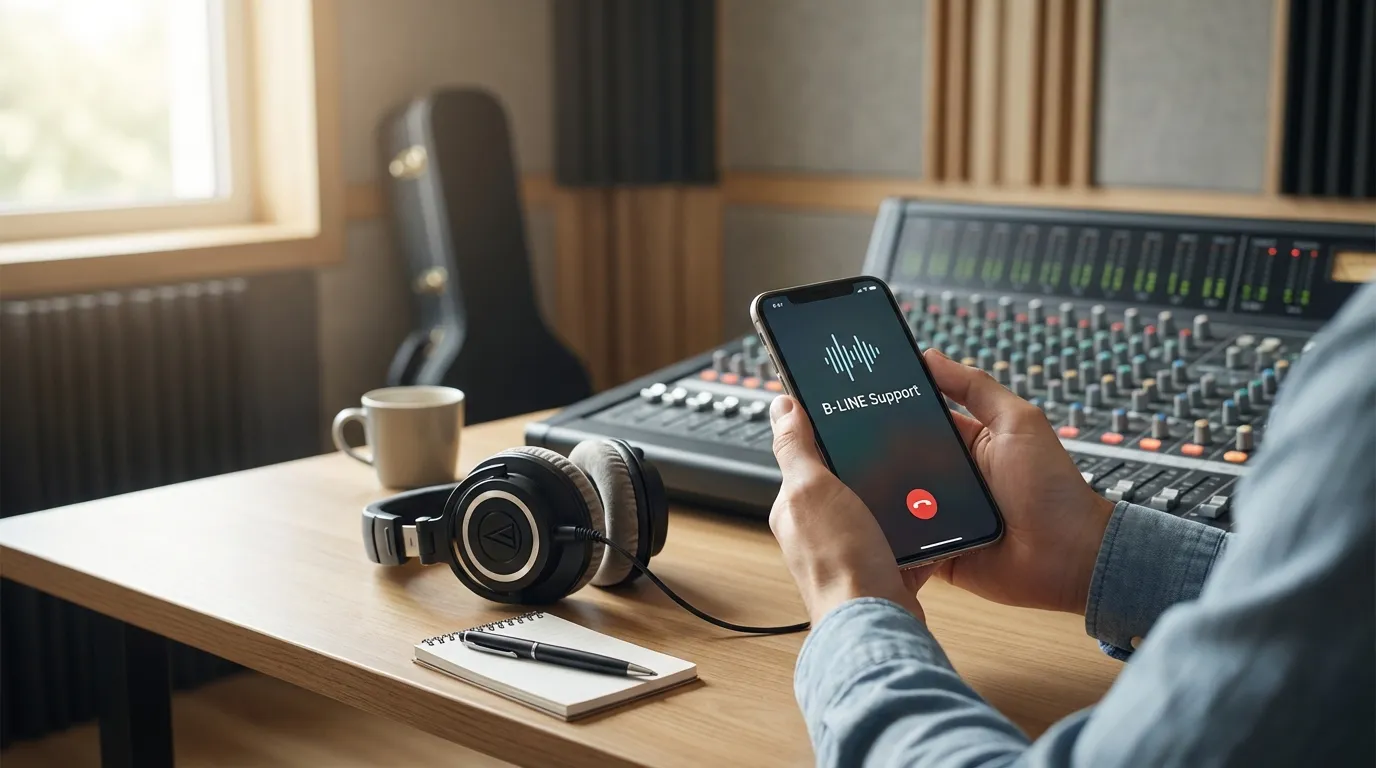
B-LINE : Backline's new 24/7 mental health line for music professionals
28 January, 2026
The phone call came at 3 AM, somewhere between the fifteenth and sixteenth city on a grueling tour schedule. A touring musician, exhausted and isolated, needed someone who understood that “just take a break” is not advice that works when your livelihood depends on showing up night after night. For years, that call had nowhere specific to go. Now it does.
Backline, the nonprofit organization that has become one of the music industry’s most trusted mental health resources, launched B-LINE in early 2024. This dedicated 24/7 crisis support line connects music industry workers directly with licensed mental health professionals who understand the realities of working in music. Not a generic hotline where callers must explain what a tour manager does, but a service built specifically for the pressures faced by artists, crew, managers, and venue staff.
The timing matters. Mental health awareness in music has increased in recent years, but awareness without accessible resources often leads to frustration. B-LINE fills that gap by offering immediate crisis intervention and ongoing support options for music industry workers, meeting people where they are, both emotionally and physically.
Backline’s Mission and the Evolution of Mental Health Advocacy
Backline was founded in 2019 by Hilary Gleason after her brother’s death, with a clear premise: music industry workers deserve mental health support designed for their reality. The organization initially focused on connecting individuals with therapists and treatment programs. While effective, it quickly became clear that people in crisis needed immediate help, not a referral process that could take days.
Through years of work, Backline identified a critical gap. Traditional crisis services often failed music professionals because counselors lacked understanding of industry-specific stressors. Explaining why you cannot “go home and rest” when you are contractually obligated to remain on tour wastes precious time during a crisis. B-LINE emerged from these lessons, combining licensed clinical care with training rooted in music industry culture.
Why Music Professionals Require Specialized Crisis Resources
The music industry operates unlike most professions. Irregular schedules disrupt sleep. Constant travel creates isolation despite being surrounded by people. Financial instability persists even at higher levels of success. Substance availability is normalized, and many workers lack health insurance due to freelance or contractor status.
Generic crisis lines often miss these nuances. Advice that might work for an office worker can be impractical or harmful on a tour bus, in a green room, or during a festival run. B-LINE counselors understand that every minute spent explaining context is a minute not spent addressing the crisis itself. This specificity is not a luxury. It is essential.
Immediate Access to Trained Mental Health Professionals
B-LINE operates 24/7, reflecting an industry that does not follow standard hours. Crises often peak late at night, after shows end and adrenaline fades. Callers are connected directly with licensed mental health professionals who can assess safety, provide immediate coping strategies, and help plan the next few hours.
Counselors are trained to work within real-world constraints. They expect background noise, interrupted calls, and limited time. Whether someone is calling from a tour bus, a studio, or backstage, the support adapts to the situation rather than asking the caller to adapt to the service.
Navigating High-Pressure Environments on the Road and in the Studio
Touring creates a concentrated set of stressors: sleep deprivation, limited privacy, strained relationships, and the constant pressure to perform. Studio environments bring different challenges, including long hours, creative vulnerability, and high financial stakes. In both cases, stepping away is often not an option.
B-LINE counselors offer practical interventions that work within these environments. Instead of recommending unrealistic solutions, they focus on strategies that can be used quickly, discreetly, and without ideal conditions. The service recognizes that crisis does not always mean immediate danger. Panic attacks, burnout, and cumulative stress are treated with the same seriousness as acute emergencies.
Addressing the Unique Triggers of the Touring Lifestyle
Substance use in music is often cultural and structural, not simply personal. Networking happens at bars. After-show celebrations center on alcohol. Energy for late nights and early load-ins is frequently chemically supported. These realities make standard sobriety advice ineffective.
B-LINE provides nonjudgmental substance use counseling that acknowledges these conditions. Counselors work with callers on harm reduction strategies, sobriety maintenance, and treatment options that accommodate touring schedules rather than requiring people to leave their careers entirely.
Pathways to Recovery and Long-Term Peer Support
Beyond crisis intervention, B-LINE serves as an entry point to Backline’s broader support network. Callers can be connected with therapists, psychiatrists, peer support groups, and treatment programs experienced in serving music industry professionals.
Peer support plays a critical role. Speaking with others who have maintained recovery while touring offers guidance that clinical care alone cannot provide. Backline also assists with navigating financial barriers by identifying sliding-scale providers and industry-specific funding resources.
How B-LINE Operates: Privacy and Accessibility Standards
Confidentiality is central to B-LINE’s design. Calls are not recorded and are protected under HIPAA guidelines. Counselors do not contact employers, managers, or family members without permission except in cases of imminent danger.
The service is free, available by call or text, and does not require proof of industry employment. Accessibility options continue to expand, reducing barriers between someone in crisis and the support they need.
Building a Sustainable Future for Mental Wellness in Music
B-LINE is part of a broader effort to shift how the music industry approaches mental health. Backline partners with labels, touring companies, venues, and festivals to normalize mental health support as standard infrastructure rather than emergency intervention.
The long-term goal is an industry where asking for help carries no more stigma than addressing a physical injury. That future is still taking shape, but each answered call represents progress. For music industry workers who are struggling, B-LINE exists as a place where understanding is built in, not explained. In moments of crisis, that understanding can make all the difference.