.svg)
Bandcamp Bans All AI-Generated Music
Bandcamp has drawn a hard line in the sand by banning all AI-generated music, positioning itself as one of the first major platforms to explicitly prioritize human creativity over machine-made content. As AI music floods streaming platforms and blurs the line between tool and author, the decision raises bigger questions about authorship, fairness, and the future of independent music.

Bandcamp has announced a ban on all AI-generated music, a move that immediately set it apart from most other digital music platforms. The decision reflects a growing tension across the music industry as artificial intelligence tools become capable of producing full songs with little or no human involvement.
Bandcamp has long positioned itself as a home for independent artists. The platform emphasizes direct artist-to-fan relationships, fairer revenue splits, and music rooted in personal expression. The rise of AI-generated music began to challenge that foundation.
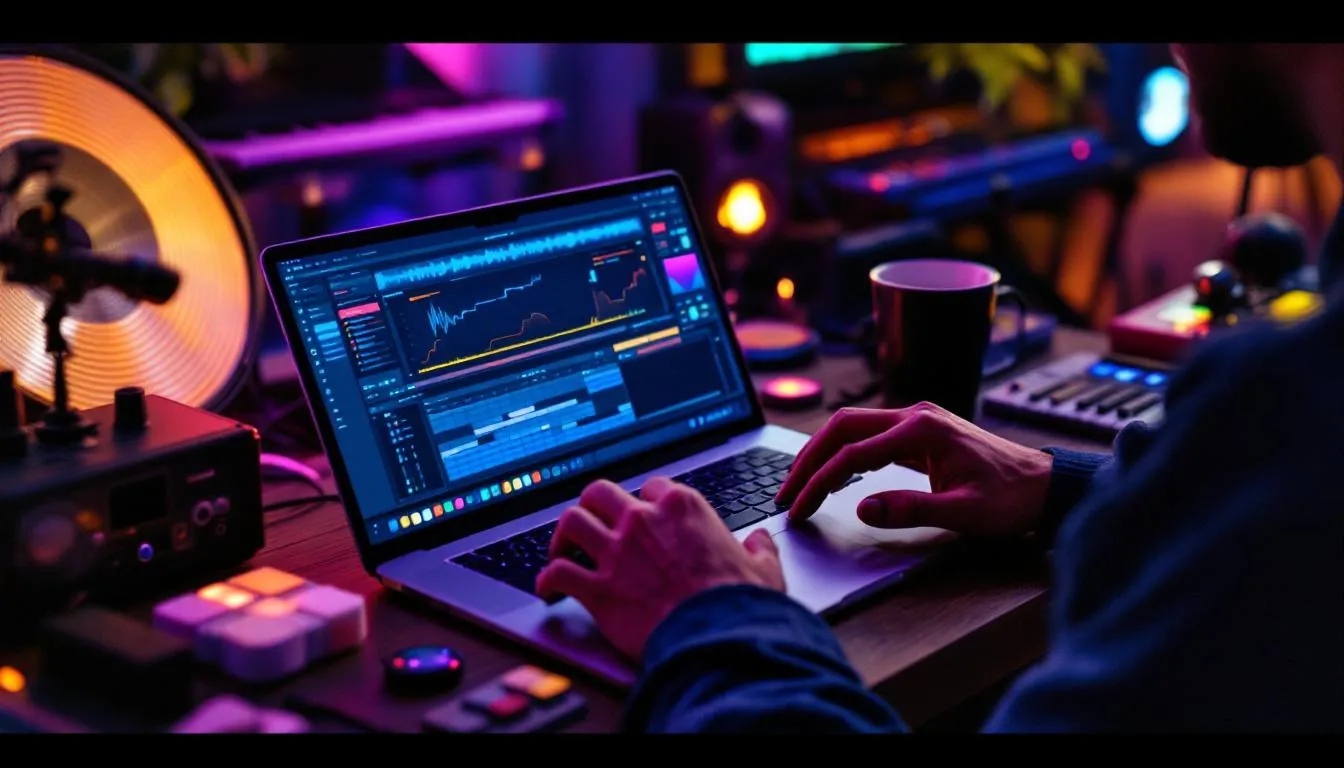
AI music tools are now widely accessible. Entire albums can be generated by anyone with a laptop, often without traditional musical skills or creative labor. While this lowers barriers to entry, it also introduces a fundamental conflict with Bandcamp’s core values. The platform’s leadership has framed the ban as a way to protect human creativity and prevent artists from being overshadowed by mass-produced, machine-generated content.
The Flood of AI Music Online
Over the past year, AI-generated tracks have rapidly multiplied across platforms like YouTube and Spotify. Many are uploaded at high volume, often by anonymous accounts or automated systems. The result is a glut of content that can feel repetitive, low-effort, or difficult to distinguish from human-made music.
For listeners, this creates friction. Finding intentional, expressive work becomes harder when algorithmically generated tracks dominate discovery systems. For artists, the concern is deeper. AI music can be produced faster and cheaper than human-made work, raising fears about the devaluation of artistic labor.
Bandcamp’s ban draws a clear boundary. The platform is explicitly reserving space for music created by people, not machines. This is not only a philosophical stance but also an economic one. Independent musicians rely on visibility, community support, and organic discovery, all of which can be undermined if automated content floods the ecosystem.
Beyond creation, AI also influences trends and recommendation systems. Algorithms can shape what listeners encounter, potentially sidelining smaller artists who already struggle for attention. Bandcamp’s policy signals an attempt to protect diversity and human authorship in an increasingly automated environment.
What Counts as AI-Generated Music?
Not all uses of AI are treated equally. AI can assist in many parts of the creative process, from mastering and sound design to beat generation. Some artists use AI as a starting point, then add vocals, instrumentation, and songwriting that clearly reflect human intent.
Bandcamp’s policy focuses on music that is primarily created by AI, where the algorithm acts as the main composer or performer. Tracks that rely heavily on AI with minimal human creative input are not allowed. Music that uses AI as a tool within a broader human-driven process may still be permitted.
This distinction leaves room for experimentation while maintaining a focus on human authorship. The challenge lies in enforcement, as the line between assistance and authorship is not always obvious.
Where the Line Is Drawn
Many musicians already rely on technology. Synthesizers, digital audio workstations, and sample libraries have long blurred the line between human and machine. Bandcamp has not banned hybrid workflows where artists remain clearly in control of the creative direction.
The ban targets music that is effectively machine-made. This approach allows space for innovation without opening the door to content factories that overwhelm the platform. As AI tools continue to evolve, debates around authorship and creativity are likely to intensify. The music industry is still defining what originality means when machines can generate convincing imitations of human expression.
Artist Reactions and Industry Concerns
Reactions from artists have been mixed. Many independent musicians support the ban, viewing it as a necessary defense of creative labor and sustainability. For them, Bandcamp represents one of the few remaining platforms where human-made music is the priority.
Others worry the policy could limit experimentation or discourage new forms of collaboration between artists and AI tools. AI can offer novel sonic possibilities, and some fear that strict rules may slow creative exploration.
There is also the issue of fairness. If AI-generated music is allowed to scale unchecked, it could crowd out human artists who lack the resources to compete with automated output. Bandcamp’s policy aims to prevent that imbalance.
What This Means for the Future
Bandcamp’s decision is a statement about values. It asserts that human creativity still matters, even as technology becomes more capable. It also raises broader questions about how platforms should handle AI-generated art and where responsibility lies.
Other platforms may not follow Bandcamp’s lead, but the move adds pressure to clarify policies. The industry may eventually split into spaces that prioritize human-made music, spaces that embrace AI-generated content, and hybrid environments where both coexist.
Supporting Human Musicians
Listeners still play a role. Buying directly from artists, attending live shows, sharing music intentionally, and paying attention to how music is made all help sustain a healthy ecosystem.
Bandcamp’s ban highlights a larger cultural question. In a world where machines can imitate art, what do we choose to value? For now, Bandcamp is choosing people.
Run your music business from one place
Lifetime pre-saves, distribution, and royalty accounting in one workspace.