.svg)
Universal Music Group x Nvidia Partner on Responsible AI
Universal Music Group and Nvidia are teaming up to tackle one of the biggest questions facing music right now: how do you use AI without screwing over artists? As AI tools get more powerful and more accessible, the risks around deepfake vocals, unlicensed content, and algorithm driven sameness are growing fast. This partnership is not about hype or speed. It is about building ethical guardrails, protecting artist rights, and shaping how AI should actually be used in music going forward. If you care about where music is headed, and who stays in control when machines get involved, this is one collaboration worth paying attention to.

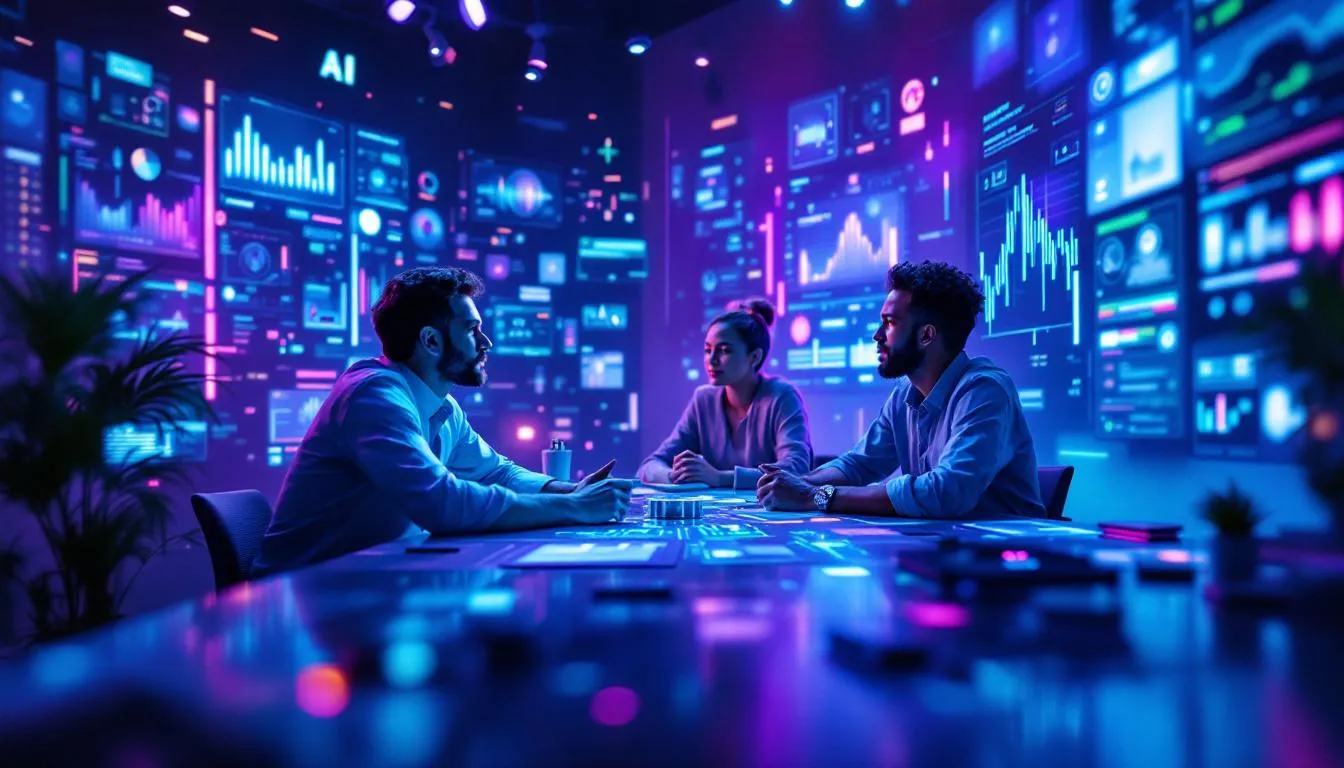
Imagine a world where music created with advanced technology still respects artist rights, ethics, and creative integrity. That is the goal behind Universal Music Group’s new partnership with Nvidia, centered on building and promoting Responsible AI in the music industry. This collaboration is not just about innovation. It is about defining how artificial intelligence should be used as it becomes more deeply embedded in music creation, distribution, and discovery.
Why Responsible AI Matters in Music
AI has already reshaped how music is made and consumed. Tools can generate beats, clone voices, recommend songs, and even create fully synthetic artists. While this opens new creative doors, it also creates serious risks. AI can easily be misused through deepfake vocals, unlicensed use of an artist’s style, or systems that quietly favour certain genres, sounds, or demographics.
UMG and Nvidia are responding to those risks directly. Their focus is not on using AI simply because it is fast or scalable, but on ensuring it operates with transparency, fairness, and accountability. Responsible AI, in this context, means technology that supports human creativity rather than replacing it or exploiting it. It also means making sure artists understand how AI is being used with their work and that audiences can trust what they are hearing.
The Stakes for the Industry
The global music industry generates over $60 billion annually, and AI tools are becoming easier for anyone to access. Without safeguards, the market could be flooded with unauthorized AI generated music that devalues original work and blurs the line between real and synthetic creators. Artists risk losing control over their voices, likenesses, and creative identities, raising legal and ethical questions that the industry is still struggling to answer.
UMG has a massive catalog representing thousands of artists, making protection of intellectual property a top priority. Partnering with Nvidia gives UMG access to deep technical expertise from a company that has already invested heavily in ethical AI development. This combination positions them to address both creative and legal challenges as AI adoption accelerates.
The impact also extends to fans. Algorithm driven discovery systems can unintentionally push music toward sameness, where certain sounds dominate because they perform well in data models. That risks sidelining emerging or unconventional artists and narrowing the diversity that makes music culturally powerful.
What Nvidia Brings
Nvidia is best known for its GPUs, which power everything from gaming to large scale AI research. In recent years, the company has also focused on AI systems that can be audited, explained, and monitored for bias. This aligns closely with UMG’s goals.
Explainable AI is especially important in music. When a system recommends a track, generates audio, or analyzes a catalog, stakeholders need to understand why it made those decisions. Transparency helps build trust among artists, labels, and listeners, and reduces fear around black box algorithms shaping careers behind the scenes.
Creative Tools Without Losing Control
Beyond ethics, Nvidia’s technology enables advanced creative tools. GPU accelerated models can support real time music generation, remixing, mastering, and audio analysis. Used responsibly, these tools can help artists experiment faster while staying in control of the final result.
AI can assist with tasks like vocal isolation, harmony suggestions, or analyzing mood and structure. These systems are meant to augment human decision making, not replace it. By handling technical or exploratory tasks, AI can free artists to focus on emotion, storytelling, and originality.
Shaping the Future of Music AI
UMG and Nvidia are not just building tools. They are working toward shared guidelines for how AI should be used across the industry. This includes addressing copyright, consent, data privacy, and compensation.
A key focus is ensuring that AI systems respect artist rights. If AI generated content is based on an artist’s work, it should be properly licensed and fairly compensated. Solving this is complex, but essential for long term trust and sustainability.
Setting Broader Standards
UMG plans to share insights and best practices with the wider music community. The goal is to encourage industry wide standards that protect both creators and listeners. They are also exploring how AI can improve music discovery in more inclusive ways, helping fans find new artists without reinforcing cultural or stylistic bias.
What It Means for Artists and Fans
For artists, this partnership signals that AI does not have to be a threat. With clear guardrails, it can become a trusted creative tool. Artists gain new ways to experiment while maintaining control over their identity and work.
Fans benefit from clearer boundaries around AI music, less confusion over authenticity, and richer discovery experiences built with respect for creators.
Looking Ahead
Responsible AI will not be solved overnight. Legal frameworks are still evolving, and technology will continue to move quickly. There will be ongoing debate about imitation, inspiration, and fair compensation. Still, the UMG and Nvidia partnership represents a serious attempt to address these issues rather than avoid them.
This collaboration could also influence other creative industries, from film to gaming, by showing how AI can be integrated thoughtfully. It is a reminder that innovation and responsibility can coexist, and that the future of music does not have to come at the expense of the people who make it.
Run your music business from one place
Lifetime pre-saves, distribution, and royalty accounting in one workspace.